
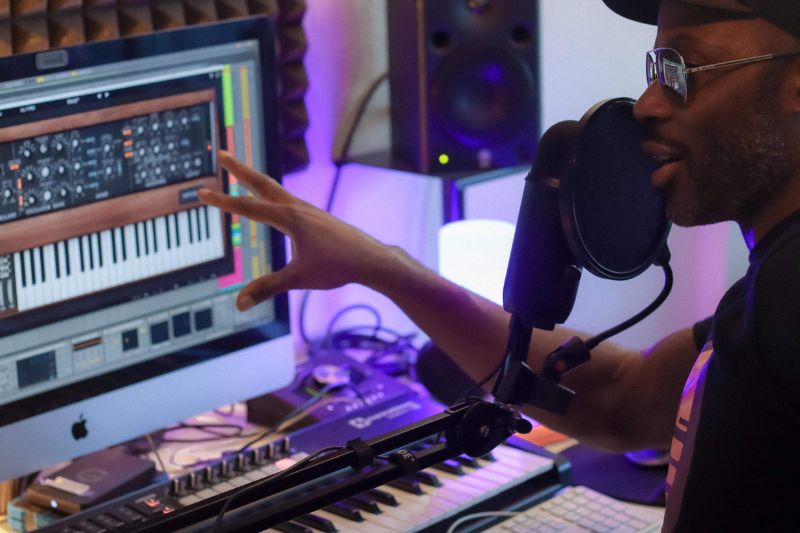
Synthwave might sound like neon lights turned into music — nostalgic, dreamy, powerful, retro, and modern all at once. But if you’re just getting started, it can feel overwhelming: “What synth do I buy?” “Do I need analog gear?” “Why does everyone sound like Timecop1983 except me?”
Relax. Every synthwave producer started exactly where you are now — staring at a blank DAW with a head full of neon. Here’s the real, no-fluff guide to what you actually need to begin your synthwave journey.
A DAW You Feel Comfortable In
Your DAW (Digital Audio Workstation) is your home base. Any modern DAW works — Ableton Live, FL Studio, Logic Pro, Reaper, Studio One.
What really matters is:
- You enjoy using it
- You understand it enough to finish tracks
- It doesn’t slow your creative momentum
If you already have a DAW, stick with it. Don’t waste weeks “shopping” for a perfect one. There is none.
A Good Synth Plugin (You Only Need One to Start)
Synthwave is built on lush pads, warm basses, and iconic leads.
You can get 90% of the sound from just one solid soft synth:
- Serum — super popular, clean, modern, easy to shape sounds
- Vital — free, powerful, surprisingly close to Serum
- Lush pads? → TAL-U-NO-LX (Juno emulation)
- Analog character? → Arturia Analog Lab
Beginners often get stuck thinking they need 20 synths. You don’t.
Learn one, go deep, make magic.
A Basic Drum Kit (Preferably 80s-Inspired Samples)
Look for:
- Gated snares
- Saturated tom fills
- Warm analog kicks
- Tight claps
- Airy open hats
You don’t need to design drums from scratch — sample packs are your best friend.
(And yes, synthwave drums are usually samples, not synthesized.)
The Right Effects
✔ Reverb
The 80s were soaked in reverb.
Valhalla VintageVerb is the GOAT, but your stock reverb works fine to start.
✔ Delay
For lush leads and atmospheric pads.
✔ Chorus
Essential for that shimmering, dreamy width.
The Juno chorus sound is everywhere in synthwave.
✔ Saturation
Adds analog-like warmth and fullness.
✔ Compression (Optional for Beginners)
Useful, but you can get far without diving deep into it yet.
Basic Music Theory (You Only Need a Little)
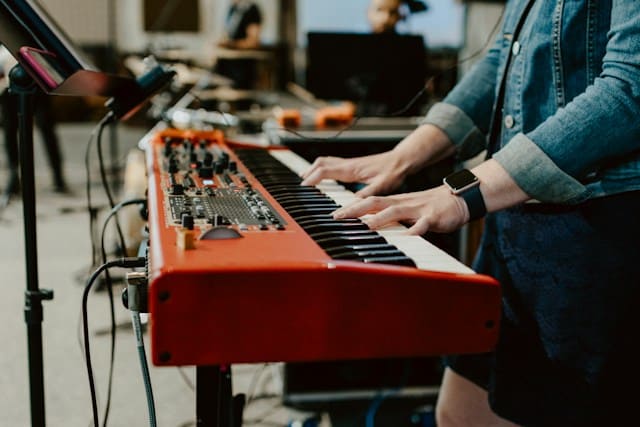
You don’t need to be Beethoven. Synthwave thrives on simple, emotional progressions.
Learn:
- Major/minor chords
- How to build 7th chords
- How to make slow, nostalgic chord progressions
- Basic melody writing
A lot of classic synthwave uses:
- A minor
- D minor
- F major
- G major
These keys feel naturally “nostalgic.”
A Good Pair of Headphones
You don’t need expensive studio monitors right away.
A solid pair of headphones gives you accuracy and comfort.
Great beginner-friendly options:
- Audio-Technica ATH-M50x
- Beyerdynamic DT 770 Pro
- Sennheiser HD 280 Pro
Get something neutral so your mixes translate well.
The Ability to Finish Music
This is the secret beginners underestimate.
You can have:
✔ The best synth
✔ The best samples
✔ The best plugins
…but if you never finish songs, you’ll never grow.
Set a simple workflow:
- Pick a tempo (usually 84–110 BPM)
- Build a chord progression
- Add a bassline
- Add drums
- Add lead melody
- Arrange into intro → verse → chorus → outro
- Light mix
- Bounce it, upload it, move on
Quantity creates quality. Every producer learns by finishing.
Inspiration & Reference Tracks
This is huge. Don’t guess what “good” sounds like — reference it.
Study songs by:
- Timecop1983
- The Midnight
- FM-84
- HOME
- Mitch Murder
Drop their track into your DAW, listen critically, and compare:
- Drum levels
- Reverb amount
- Bass tone
- Arrangement patterns
This accelerates your growth by 10x.
Final Thoughts: Start Simple, Grow Fast
You don’t need analog gear.
You don’t need fancy plugins.
You don’t need music school.
You need:
- One DAW
- One synth
- One drum kit
- A handful of effects
- The hunger to finish tracks
Every synthwave legend began with the same simple tools. What separates pros from beginners is consistency, curiosity, and finishing music even when it’s imperfect.
You’ve already got the passion — now build the skills.
Recent Posts
Finding Inspiration in Writing Synthwave Music: Tapping into the Neon Muse
Synthwave is more than just a genre—it’s a vibe, a feeling, and a cinematic journey. With its roots buried deep in 1980s nostalgia, VHS textures, retrofuturistic fantasies, and analog warmth,...
Synthwave Tempos Explained: Finding the Right BPM for Your Track
One of the first choices you make when starting a synthwave track is tempo. The beats per minute (BPM) you choose sets the pace, energy, and emotional impact of your song. While synthwave isn’t...